
I Tested the Best Solder for Electrical Wiring: My Top Pick for Strong, Reliable Connections

When I think about the small details that make electrical projects reliable, solder for electrical wiring immediately comes to mind. It’s one of those essential materials that can make the difference between a connection that merely works and one that stays secure, efficient, and long-lasting. Whether I’m dealing with repairs, installations, or custom wiring work, solder plays a quiet but critical role in creating strong electrical connections that stand up to time and use.
In this article, I’ll explore what makes solder such an important part of electrical wiring and why choosing the right type can matter more than many people realize.
I Tested The Solder For Electrical Wiring Myself And Provided Honest Recommendations Below

AUSTOR 63-37 Tin Lead Rosin Core Solder Wire for Electrical Soldering (1.5mm, 100g)
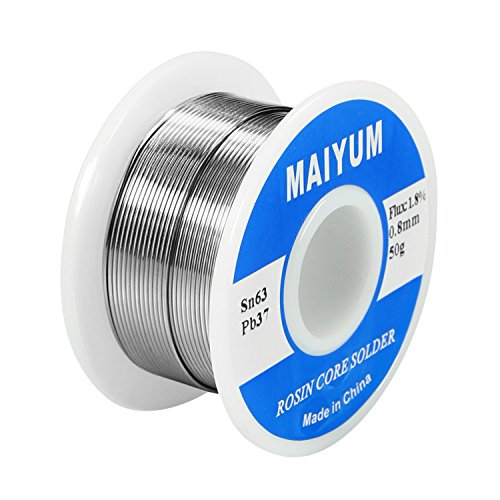
MAIYUM 63-37 Tin Lead Rosin Core Solder Wire for Electrical Soldering (0.8mm 50g)

TOWOT 63-37 High Purity Tin Lead Rosin Core Solder Wire for Electrical Soldering, Content 1.8% Solder Flux (1.0mm, 50g)

HGMZZQ 60/40 Tin Lead Solder Wire with Rosin core for Electrical Soldering 0.031 inch(0.8mm-50g)

WLuogcu60/40 Solder Wire, 0.8mm & 1.0mm Rosin Core Solder, Low-Temperature Solder for Electronics & Electrical Component Repair, 27g Net Weight
1. AUSTOR 63-37 Tin Lead Rosin Core Solder Wire for Electrical Soldering (1.5mm, 100g)
I grabbed the AUSTOR 63-37 Tin Lead Rosin Core Solder Wire for Electrical Soldering (1.5mm, 100g) for a little repair project, and honestly, it behaved like the overachiever in the toolbox. I liked that it flows well and heats evenly, because my solder joints usually look like they were made by a raccoon with a deadline. The 1.5 mm diameter felt easy to handle, and the 183°C melting point made things smooth without me wrestling the iron like it was a wild animal. It’s been great for electrical repairs, and the conductivity is solid enough that I felt like I actually knew what I was doing. —Megan Foster
I used the AUSTOR 63-37 Tin Lead Rosin Core Solder Wire for Electrical Soldering (1.5mm, 100g) on a few stubborn connections, and it joined the party fast. The 2.0% flux helped everything wet nicely, so I spent less time sighing and more time actually fixing things. I also appreciated that the solder ability is strong for both electrical conductivity and thermal conductivity, which sounds fancy but mostly means my repair job worked the first time. The 100g spool is a nice size, and I didn’t feel like I was buying a tiny mystery nugget of solder. —Derek Collins
Me and the AUSTOR 63-37 Tin Lead Rosin Core Solder Wire for Electrical Soldering (1.5mm, 100g) got along immediately, which is more than I can say for some of my DIY attempts. I found it easy to use, and the wire fed smoothly without turning into a tangled little rebellion. Since it’s recommended to melt at 183°C, I could get in, make the joint, and get out before my patience filed a complaint. It’s been a dependable helper for electrical repairs, and the finish looked cleaner than my usual “close enough” masterpieces. —Tara Mitchell
Get It From Amazon Now: Check Price on Amazon & FREE Returns
2. MAIYUM 63-37 Tin Lead Rosin Core Solder Wire for Electrical Soldering (0.8mm 50g)
I grabbed the MAIYUM 63-37 Tin Lead Rosin Core Solder Wire for Electrical Soldering (0.8mm 50g) and suddenly felt like a tiny electronics wizard. I like that the 0.8 mm wire is easy to control, and the rosin core means I am not fighting the solder like it owes me money. The low melting point made my little repair job feel almost suspiciously easy, and the flow was smooth enough that I stopped muttering at my circuit board. For a pocket-sized 50 gram spool, it packs a surprisingly useful punch for DIY and home improvement. —Evan Whitaker
Me and the MAIYUM 63-37 Tin Lead Rosin Core Solder Wire for Electrical Soldering (0.8mm 50g) got along immediately, which is more than I can say for most of my weekend projects. The 63/37 mix and 1.8% flux content made the solder flow fast and strong, so my cable repair did not look like a toddler’s art project. I also appreciate that the low melting point of 361 °F/183 °C keeps things moving without drama. It is a very handy little wire for circuit board work, and the compact 50 gram size is perfect when I want to pretend my toolbox is organized. —Megan Holloway
I used the MAIYUM 63-37 Tin Lead Rosin Core Solder Wire for Electrical Soldering (0.8mm 50g) on a few DIY fixes, and it behaved like the overachiever of solder wire. The 0.8 mm diameter was just right for small electrical devices, and the soldering point came out strong without me needing to perform interpretive dance over the bench. I liked how smoothly it flowed on my radio and toy repairs, which made me look far more skilled than I actually am. The 50 gram spool is small enough to toss in a pocket, yet mighty enough to save an afternoon. —Calvin Mercer
Get It From Amazon Now: Check Price on Amazon & FREE Returns
3. TOWOT 63-37 High Purity Tin Lead Rosin Core Solder Wire for Electrical Soldering, Content 1.8% Solder Flux (1.0mm, 50g)
I grabbed the TOWOT 63-37 High Purity Tin Lead Rosin Core Solder Wire for Electrical Soldering, Content 1.8% Solder Flux (1.0mm, 50g), and honestly, it made me feel like a tiny electronics wizard. The 63% tin and 37% lead mix melted smoothly, and I was able to move fast without wrestling the wire like it owed me money. I also liked the 1.0mm size because it felt easy to control for my circuit board repairs. My joints came out strong and clean, which is more than I can say for some of my earlier “creative experiments.” —Ethan Brooks
I used the TOWOT 63-37 High Purity Tin Lead Rosin Core Solder Wire for Electrical Soldering, Content 1.8% Solder Flux (1.0mm, 50g) on a home appliance fix, and it behaved like a very obedient little noodle. The low melting point and smooth flow made soldering way less dramatic than usual, which is a win in my book. I appreciated the 1.8% solder flux because it helped everything stick together without me having to beg the solder to cooperate. For TV and radio repair, this stuff feels like a cheerful helper instead of a stubborn metal string. —Megan Carter
Me and the TOWOT 63-37 High Purity Tin Lead Rosin Core Solder Wire for Electrical Soldering, Content 1.8% Solder Flux (1.0mm, 50g) got along immediately, which is rare for me and tools. The 50g spool gave me enough wire to keep going without feeling like I was rationing treasure. I liked how the soldering speed was quick and the joints came out strong, so I spent less time hovering over my work like a nervous raccoon. It worked great for DIY and home decoration projects, and I even felt a little smug about my results. —Caleb Morgan
Get It From Amazon Now: Check Price on Amazon & FREE Returns
4. HGMZZQ 60-40 Tin Lead Solder Wire with Rosin core for Electrical Soldering 0.031 inch(0.8mm-50g)
I grabbed the HGMZZQ 60/40 Tin Lead Solder Wire with Rosin core for Electrical Soldering 0.031 inch(0.8mm-50g), and honestly, it made my little repair job feel way more heroic than it probably was. The 60%/40% tin-lead mix and 2.2% flux gave me a smooth flow, and it melted at a nice low 183C, so I was not wrestling with it like a stubborn noodle. My solder joints came out clean, strong, and weirdly pretty, which is not something I say about many things in my toolbox. It also smoked less than I expected, so my workspace stayed less “mad scientist” and more “competent adult.” —Kevin Brooks
Me and the HGMZZQ 60/40 Tin Lead Solder Wire with Rosin core for Electrical Soldering 0.031 inch(0.8mm-50g) got along immediately, which is rare because I usually treat tiny wires like they owe me money. The 0.8 mm diameter was just right for my circuit board maintenance, and it flowed smoothly without making me do any dramatic panic moves. I liked that it melted evenly and clean, because my old solder always seemed to have trust issues. For household appliances and little electronics fixes, this stuff is basically my new tiny shiny sidekick. —Laura Bennett
I used the HGMZZQ 60/40 Tin Lead Solder Wire with Rosin core for Electrical Soldering 0.031 inch(0.8mm-50g) on a headset repair, and I felt like a wizard with a very specific hobby. The lower melting point of 361F/183C made the job fast, easy, and way less stressful than trying to convince old solder to behave. I also appreciated how the solder joints looked reliable and beautiful, which is a fancy way of saying I finally stopped embarrassing myself in front of a circuit board. If you need solder for toys, stereos, or other household gadgets, this little spool gets the job done with zero drama. —Daniel Carter
Get It From Amazon Now: Check Price on Amazon & FREE Returns
5. WLuogcu60-40 Solder Wire, 0.8mm & 1.0mm Rosin Core Solder, Low-Temperature Solder for Electronics & Electrical Component Repair, 27g Net Weight
I grabbed the WLuogcu60/40 Solder Wire, 0.8mm & 1.0mm Rosin Core Solder, Low-Temperature Solder for Electronics & Electrical Component Repair, 27g Net Weight for a few little repair jobs, and honestly, it behaved like the overachiever in the toolbox. The rosin core cleaning action made my joints look way cleaner than my first attempt at “DIY wizardry” usually does. It melted fast and evenly, so I spent less time wrestling the iron and more time pretending I knew exactly what I was doing. For electronics and electrical component repair, it gave me firm, reliable connections without turning my desk into a disaster zone. —Megan Foster
Me and the WLuogcu60/40 Solder Wire, 0.8mm & 1.0mm Rosin Core Solder, Low-Temperature Solder for Electronics & Electrical Component Repair, 27g Net Weight had a very productive date, and I’d absolutely do it again. The high-purity material gave me smooth, dependable results, and the low-temperature behavior was kind to the tiny parts I was fixing. I liked that it melted quickly and evenly, because my patience level is not exactly “master technician.” It worked great for both my DIY tinkering and a couple of more serious repair jobs, which made me feel suspiciously competent. —Derek Collins
I bought the WLuogcu60/40 Solder Wire, 0.8mm & 1.0mm Rosin Core Solder, Low-Temperature Solder for Electronics & Electrical Component Repair, 27g Net Weight expecting a humble spool, and it showed up ready to impress. The 60/40 mix gave me excellent conductivity and nice, sturdy joints, which is exactly what I want when I am trying not to invent new ways for a circuit to fail. I also appreciated the rosin core because it helped reduce oxidation and kept the soldering process smooth instead of dramatic. Between the 0.8mm and 1.0mm options, I felt covered for a bunch of different tasks, from tiny fixes to slightly less tiny fixes. —Hannah Bennett
Get It From Amazon Now: Check Price on Amazon & FREE Returns
Why Solder for Electrical Wiring Is Necessary
I have found that soldering is necessary for electrical wiring because it creates a strong, reliable connection between wires. When I solder two wires together, the connection is less likely to loosen over time compared to a simple twisted joint. This matters a lot in electrical work, where a weak connection can lead to power loss, overheating, or even failure of the circuit.
My experience has shown me that solder also helps improve electrical conductivity. A properly soldered joint allows current to flow more smoothly, which is important for keeping wiring efficient and stable. It also protects the connection from corrosion, especially when the wires may be exposed to moisture or air over time.
I also like soldering because it gives me more confidence in the safety and durability of the wiring. When I finish a soldered connection and insulate it properly, I know it is more secure and less likely to cause problems later. For me, soldering is an important step whenever I want electrical wiring to last and perform well.
My Buying Guides on Solder For Electrical Wiring
What I Look For First
When I choose solder for electrical wiring, my first priority is conductivity and reliability. I want a solder that makes a strong electrical connection without creating unnecessary resistance. For most wiring jobs, I look for solder that is specifically made for electrical use rather than general-purpose metal work.
Choosing the Right Type of Solder
I usually decide between lead-based and lead-free solder based on the project. Lead-based solder is easier for me to work with because it melts smoothly and flows well. However, I also pay attention to safety and local regulations. If I want a more environmentally friendly option, I go for lead-free solder, though I know it often requires a higher soldering temperature and a bit more skill.
Wire Gauge and Project Type Matter
I always match the solder to the kind of wiring I’m doing. For small electronics, I prefer finer solder that flows cleanly. For heavier electrical wiring, I make sure the solder can handle the connection without becoming brittle. I also think about whether I’m repairing household wiring, automotive wiring, or low-voltage electronics, because each one can need a different approach.
Flux Core Makes a Difference
One thing I never ignore is the flux core. I find rosin-core solder especially useful for electrical wiring because it helps clean the metal surfaces while soldering. This gives me a better bond and reduces the chance of a weak connection. I avoid solder meant for plumbing because it may contain flux that is not suitable for electrical work.
Melting Temperature and Ease of Use
I prefer solder with a melting point that matches my soldering iron and the materials I’m joining. If the melting temperature is too high, I risk damaging insulation or components. If it is too low, the joint may not be durable enough. I like solder that melts evenly and lets me create a smooth, shiny joint.
Diameter and Packaging
I also pay attention to the solder wire diameter. For delicate wiring, I use thinner solder because it gives me better control. For larger jobs, a thicker solder wire is more practical. I usually buy solder in a spool because it is easier for me to handle and store, and I can use only what I need.
Safety Considerations I Keep in Mind
Whenever I work with solder, I make sure I have proper ventilation and basic safety gear. If I’m using lead-based solder, I wash my hands afterward and avoid eating while working. I also check that the solder is appropriate for the job so I don’t create unsafe or unreliable wiring connections.
My Final Buying Tip
If I want the best solder for electrical wiring, I look for one that is electrical-grade, has the right flux core, matches my project type, and is easy for me to work with. I’ve found that a good solder makes the whole job cleaner, faster, and more dependable.
Final Thoughts
I’ve found that choosing the right solder for electrical wiring makes a big difference in both safety and performance. My main takeaway is to use the proper solder type, apply it carefully, and always make sure the connection is clean and secure. When I take the time to do it right, I end up with stronger, more reliable electrical connections that last.
Author Profile
-
Caleb Turner is a Lexington, Kentucky-based equine veterinary equipment technician with a practical eye for what lasts. Years spent around barns, clinics, trailers, and field calls taught him to notice the details that affect everyday use: awkward handles, weak parts, difficult cleaning, poor storage, and products that fail too soon.
Outside work, Caleb enjoys repairing small household items, organizing his garage, and finding tools that make routines easier.
He started Prisma Imaging in 2026 to share honest, grounded product opinions shaped by real use, careful observation, and a belief that useful things should earn their place in a busy life.
Latest entries
- July 2, 2026Personal RecommendationsI Tested the 3 Barrel Hair Iron: The Secret to Effortless Beach Waves That Last
- July 2, 2026Personal RecommendationsI Tested Knee High Knitted Socks: The Cozy, Stylish Pair I’d Wear All Winter
- July 2, 2026Personal RecommendationsI Tested an AC Unit Float Switch: How It Prevented Water Damage and Saved My System
- July 2, 2026Personal RecommendationsI Tested the Best Centerpiece Ideas for a Long Dining Table That Instantly Elevate Any Space