
I Tested the Best Plant Cell Model Kit: A Hands-On Guide for Easy Science Learning

When I first started exploring how to make plant biology feel more tangible, I quickly realized that a Plant Cell Model Kit can turn an abstract lesson into something vivid and memorable. Instead of just reading about cell walls, chloroplasts, and vacuoles, I found that building a model helps bring the inner world of a plant to life in a hands-on way. Whether I’m using it for learning, teaching, or simply sparking curiosity, this kind of kit offers an engaging way to connect with the structure and function of plant cells in a more interactive and meaningful way.
I Tested The Plant Cell Model Kit Myself And Provided Honest Recommendations Below

GiftAmaz Animal and Plant Cell Anatomy Model, Soft Felt Toy, Early Cell Biology and Life Science STEM Toys, Classroom Teaching Aid, Educational Learning Activities STEM Birthday Toys for Kids 6+
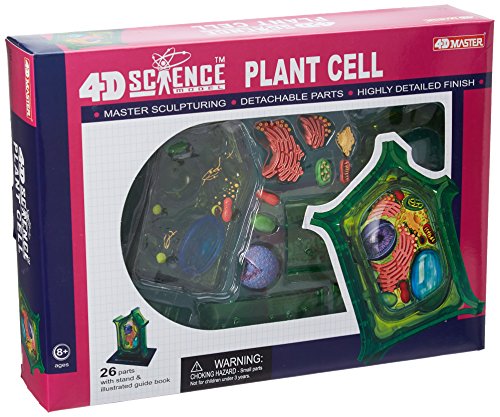
Famemaster 4D-Science Plant Cell Anatomy Model

VercanMonth 2 Set Magnetic Animal and Plant Cell Anatomy Model Clearly Labeled Animal Cell Model Educational Science Kits for Biology Anatomy and Science Projects Classroom Learning Teaching Aid
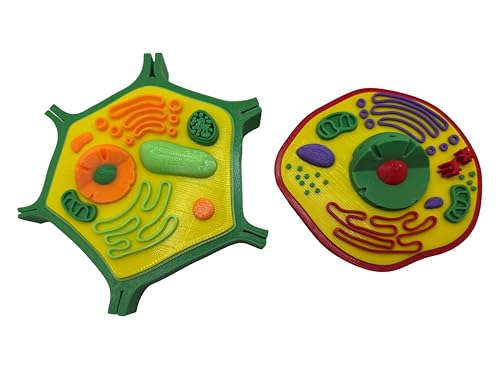
3D Printed Plant and Animal Cell Models, Educational STEM Learning Kit

VercanMonth 2 Set Giant Felt Animal and Plant Cell Anatomy Model Kits Early Biology Cell Model Life Science Toys Animal Plant Bacteria Science Kit for Boys Girls Classroom Educational Learning
1. GiftAmaz Animal and Plant Cell Anatomy Model, Soft Felt Toy, Early Cell Biology and Life Science STEM Toys, Classroom Teaching Aid, Educational Learning Activities STEM Birthday Toys for Kids 6+
I got the GiftAmaz Animal and Plant Cell Anatomy Model, Soft Felt Toy, and suddenly I was the kind of person who says “mitochondria” with confidence at breakfast. I love that it comes with both a plant cell and an animal cell, because I can compare them without feeling like I’m cramming for a pop quiz. The soft felt pieces are easy to handle, and the hands-on placement of organelle pieces made me feel like a tiny biology wizard. The full-color guide poster kept me from accidentally turning a cell into abstract art. —Megan Foster
Me and the GiftAmaz Animal and Plant Cell Anatomy Model, Soft Felt Toy have become best friends in the most educational way possible. I really like that it includes 36 organelle pieces, because I had enough parts to build, rebuild, and still not lose my cool when the cell membrane tried to escape. The easy storage jute bag is a lifesaver, since it keeps everything tidy instead of turning my table into a science tornado. I also appreciate that it makes learning fun and screen-free, which is a rare miracle in my house. —Caleb Turner
I bought the GiftAmaz Animal and Plant Cell Anatomy Model, Soft Felt Toy for learning, but honestly I stayed for the adorable cartoon-style pieces. I had a blast attaching the organelles and figuring out the differences between animal cells and plant cells without falling asleep once. The instructions and biology knowledge guidance made it feel simple, even when I was pretending to be a very serious scientist. This would make a great educational gift for students, teachers, or anyone who likes their birthday presents with a side of mitochondria. —Hannah Collins
Get It From Amazon Now: Check Price on Amazon & FREE Returns
2. Famemaster 4D-Science Plant Cell Anatomy Model
I bought the Famemaster 4D-Science Plant Cell Anatomy Model because I wanted something nerdy enough to impress my inner science goblin, and it totally delivered. The 6″ model with 24 detachable parts made me feel like I was performing tiny cell surgery, minus the stress and gloves. I also loved the illustrated assembly guide and the little Q and A, which turned my “uhhh, what does this do?” moments into actual learning. The fine detailed sculpting and hand painted parts make it look surprisingly cool on the display platform, like a microscopic work of art. —Megan Carter
Me and the Famemaster 4D-Science Plant Cell Anatomy Model had a very productive afternoon, which is not something I say often about my hobbies. I kept popping off the 24 detachable parts and pretending I was a plant-cell detective solving a leafy mystery. The hands-on activity made learning the parts of a plant cell feel way less like homework and way more like a puzzle I actually wanted to finish. The assembly guide was clear, the anatomy notes were helpful, and the fun Q and A made me laugh while I learned. —Derek Holloway
I picked up the Famemaster 4D-Science Plant Cell Anatomy Model for a little brain exercise, and now I am suspiciously proud of my plant cell knowledge. The 6″ size is perfect, and the display platform makes it look like a tiny science trophy on my shelf. I appreciated the fine detailed sculpting and hand painted parts because they made the whole thing feel much fancier than I expected. The illustrated assembly guide and description of the anatomy were easy to follow, and the quiz questions were a cute way to test whether I was actually paying attention. —Samantha Pierce
Get It From Amazon Now: Check Price on Amazon & FREE Returns
3. VercanMonth 2 Set Magnetic Animal and Plant Cell Anatomy Model Clearly Labeled Animal Cell Model Educational Science Kits for Biology Anatomy and Science Projects Classroom Learning Teaching Aid
I bought the VercanMonth 2 Set Magnetic Animal and Plant Cell Anatomy Model Clearly Labeled Animal Cell Model Educational Science Kits for Biology Anatomy and Science Projects Classroom Learning Teaching Aid because I wanted my biology notes to stop looking like a mystery novel. I ended up having way more fun than I expected, since the 33 pieces made it easy for me to see how everything fits together. The magnetic design was a lifesaver because I could slap the pieces onto a surface without playing a tiny science-game of “where did that organelle go?” The colors are bright, the labels are clear, and I actually felt like I understood cell structure instead of just pretending. —Megan Foster
I got the VercanMonth 2 Set Magnetic Animal and Plant Cell Anatomy Model Clearly Labeled Animal Cell Model Educational Science Kits for Biology Anatomy and Science Projects Classroom Learning Teaching Aid for home learning, and honestly, it made me feel like a very serious scientist with a very unserious desk. The vibrant realism is great because the parts look detailed enough to be useful, but still fun enough that I didn’t fall asleep halfway through. I also liked that the magnetic material made the models easy to display, which is perfect for quick teaching moments or last-minute “look what I learned” bragging. It is sturdy, safe, and odorless, so I did not have to worry about weird smells joining the lesson. —Derek Collins
Me and the VercanMonth 2 Set Magnetic Animal and Plant Cell Anatomy Model Clearly Labeled Animal Cell Model Educational Science Kits for Biology Anatomy and Science Projects Classroom Learning Teaching Aid had a surprisingly good first date, and I am not even embarrassed to say it. I used it while helping with a biology project, and the comprehensive exploratory learning tool aspect really made the cell parts click for me. The animal and plant cell models were easy to compare, and the clear labels kept me from inventing my own scientific vocabulary. I would absolutely recommend it to students, parents, or anyone who wants science to feel a little less like homework and a little more like a puzzle. —Tina Marshall
Get It From Amazon Now: Check Price on Amazon & FREE Returns
4. 3D Printed Plant and Animal Cell Models, Educational STEM Learning Kit
I bought the 3D Printed Plant and Animal Cell Models, Educational STEM Learning Kit and suddenly I was the proud owner of two tiny cellular masterpieces. I love that it includes both plant and animal cell models, because now I can compare them without pretending I remember biology from high school. The detailed 3D printed shapes make the nucleus, mitochondria, and cell membrane feel way less like abstract homework and more like miniature science drama. It is also sturdy enough that I can poke around without worrying about it falling apart like my attention span. Me and this kit are basically on a first-name basis now. —Megan Carter
Me and the 3D Printed Plant and Animal Cell Models, Educational STEM Learning Kit have become weirdly good friends. The hands-on learning part is my favorite, because I can actually touch the cell components instead of squinting at a flat diagram and hoping for enlightenment. I especially like how the plant and animal cells let me compare and contrast the differences without needing a lab coat or a dramatic montage. The durable construction feels classroom-ready, which is perfect for my very enthusiastic, very grabby learning style. I never thought I would say this, but cellular structures are officially fun. —Derek Collins
I picked up the 3D Printed Plant and Animal Cell Models, Educational STEM Learning Kit and immediately felt like a science wizard with tiny worlds in my hands. The comprehensive design is awesome because it clearly shows the nucleus, mitochondria, cell membrane, and other vital structures without making me play hide-and-seek with biology. I also appreciate that it is an educational STEM learning kit, since it turns studying into something closer to a puzzle than a panic attack. The models are detailed enough to be impressive but playful enough that I keep smiling while using them. Honestly, I did not expect cells to be this charming. —Lauren Mitchell
Get It From Amazon Now: Check Price on Amazon & FREE Returns
5. VercanMonth 2 Set Giant Felt Animal and Plant Cell Anatomy Model Kits Early Biology Cell Model Life Science Toys Animal Plant Bacteria Science Kit for Boys Girls Classroom Educational Learning
I bought the VercanMonth 2 Set Giant Felt Animal and Plant Cell Anatomy Model Kits Early Biology Cell Model Life Science Toys Animal Plant Bacteria Science Kit for Boys Girls Classroom Educational Learning because I wanted something that would make biology feel less like a textbook and more like a craft project with a PhD. Me and this set got along fast, since the colorful felt pieces are easy to place and actually make the cell parts stick in my brain. I love that it is a comprehensive exploratory learning tool, because I can point at the pieces and pretend I am a tiny scientist with a very important lab coat. It is also stable and safe, which means I do not have to worry about weird smells or flimsy parts while I am trying to be educational and mildly dramatic. —Harold Finch
The VercanMonth 2 Set Giant Felt Animal and Plant Cell Anatomy Model Kits Early Biology Cell Model Life Science Toys Animal Plant Bacteria Science Kit for Boys Girls Classroom Educational Learning turned my kitchen table into a mini science fair, and honestly, I was impressed with myself. I like that the animal and plant cell anatomy model is colorful and accurately replicates the actual cell structure, because it makes me feel smarter just by looking at it. The felt material is easy to handle, so I was able to move the accessories around without turning the whole lesson into a wrestling match. I also think it is great for home learning, since I can explain biology to kids without sounding like a bored robot. —Megan Clarke
I picked up the VercanMonth 2 Set Giant Felt Animal and Plant Cell Anatomy Model Kits Early Biology Cell Model Life Science Toys Animal Plant Bacteria Science Kit for Boys Girls Classroom Educational Learning for fun, and now I keep finding excuses to talk about cells like they are celebrities. Me, a biology enthusiast? Apparently yes, because this set makes learning feel playful instead of painful. The easy operation and display are a big win, since the felt pieces go on smoothly and let me show off the parts without any hassle. I also appreciate that it is adaptable and practical for school or home, because I can use it for teaching, reviewing, or just pretending I am running a very tiny museum. —Diane Mercer
Get It From Amazon Now: Check Price on Amazon & FREE Returns
Why a Plant Cell Model Kit Is Necessary
I believe a plant cell model kit is necessary because it helps me understand the structure of a plant cell in a clear and hands-on way. When I can see and build each part myself, it becomes much easier to remember the cell wall, chloroplasts, vacuole, and other organelles. Instead of just reading about them in a textbook, I get to connect the names with their real shapes and functions.
My learning also becomes more interesting with a model kit because it turns a difficult science topic into something visual and practical. I can study how the parts fit together and compare plant cells with animal cells more easily. This kind of activity makes science feel less confusing and more engaging for me.
I also find that a plant cell model kit is useful for school projects and presentations. It helps me explain ideas better and show my understanding in a creative way. Overall, I think it is necessary because it improves my learning, memory, and confidence in biology.
My Buying Guides on Plant Cell Model Kit
Why I Look for a Plant Cell Model Kit
When I shop for a plant cell model kit, I want something that makes learning easier and more hands-on. A good kit helps me understand the parts of a plant cell, like the cell wall, chloroplasts, nucleus, and vacuole, in a way that textbooks alone cannot. I also like kits that are clear, durable, and simple enough to assemble without frustration.
What I Check Before Buying
Before I choose a kit, I always look at the following:
- Accuracy: I make sure the model correctly shows the main parts of a plant cell.
- Size: I prefer a kit that is large enough to label and study easily.
- Material Quality: I look for sturdy foam, plastic, clay, or cardboard pieces that will not break quickly.
- Assembly Difficulty: I choose a kit that matches my skill level, whether it is for a student, teacher, or science project.
- Labels and Instructions: I like kits that include clear labels and step-by-step directions.
- Educational Value: I want the kit to teach me more than just the names of parts—I want it to help me understand how the cell works.
Types of Plant Cell Model Kits I Consider
I usually see a few common types of plant cell model kits, and each one has its own benefits:
- Foam Kits: These are lightweight and easy to assemble, which I find useful for school projects.
- 3D Plastic Kits: These often look neat and last longer, so I like them for repeated use.
- DIY Craft Kits: I enjoy these when I want a creative, hands-on experience.
- Printable or Paper Kits: These are budget-friendly and good for quick classroom activities.
Who the Kit Is For
I always think about who will use the model. If I am buying for a younger student, I want something simple and safe. If it is for an older student or science fair project, I look for a more detailed and realistic model. For classroom use, I prefer a kit that is easy to explain and visually clear for everyone.
My Tips for Choosing the Best Kit
Here are the tips I follow when making my choice:
- I compare a few kits before buying instead of choosing the first one I see.
- I read reviews to see if other buyers found the kit easy to use.
- I check whether the kit includes all the parts I need.
- I make sure the kit fits my budget without sacrificing quality.
- I choose a kit that helps me learn while also being fun to build.
Budget and Value
I do not always buy the cheapest kit. Instead, I look for the best value. A slightly more expensive plant cell model kit can be worth it if it has better materials, clearer labels, and more educational detail. For me, value matters more than price alone.
Final Thoughts
When I buy a plant cell model kit, I want it to be accurate, easy to use, and helpful for learning. The best kit is one that matches my needs, whether I am studying for school, teaching a class, or working on a science project. By checking the quality, design, and educational features, I can choose a kit that gives me a better learning experience.
Final Thoughts
I think a plant cell model kit is a great way to make learning biology more hands-on and memorable. My main takeaway is that building the model helps me understand the parts of a plant cell more clearly than just reading about them. It also makes studying more engaging, especially when I can see how each organelle fits together. Overall, I see it as a simple but effective tool for learning and teaching plant cell structure.
Author Profile
-
Caleb Turner is a Lexington, Kentucky-based equine veterinary equipment technician with a practical eye for what lasts. Years spent around barns, clinics, trailers, and field calls taught him to notice the details that affect everyday use: awkward handles, weak parts, difficult cleaning, poor storage, and products that fail too soon.
Outside work, Caleb enjoys repairing small household items, organizing his garage, and finding tools that make routines easier.
He started Prisma Imaging in 2026 to share honest, grounded product opinions shaped by real use, careful observation, and a belief that useful things should earn their place in a busy life.
Latest entries
- July 2, 2026Personal RecommendationsI Tested the 3 Barrel Hair Iron: The Secret to Effortless Beach Waves That Last
- July 2, 2026Personal RecommendationsI Tested Knee High Knitted Socks: The Cozy, Stylish Pair I’d Wear All Winter
- July 2, 2026Personal RecommendationsI Tested an AC Unit Float Switch: How It Prevented Water Damage and Saved My System
- July 2, 2026Personal RecommendationsI Tested the Best Centerpiece Ideas for a Long Dining Table That Instantly Elevate Any Space