
I Tested Clinical Pathophysiology Made Ridiculously Simple: The Ultimate Easy Guide for Students

I’ve always found that the most complicated medical concepts become far more approachable when they’re explained with clarity, personality, and just the right amount of simplicity. That’s exactly why the idea behind Clinical Pathophysiology Made Ridiculously Simple is so appealing: it promises to take a subject that can feel dense and intimidating and turn it into something understandable, practical, and even enjoyable to learn.
In this article, I want to explore what makes this approach so effective and why it resonates with students, clinicians, and lifelong learners alike. Whether you’re trying to strengthen your grasp of disease processes or simply looking for a smarter, less overwhelming way to study clinical medicine, this topic offers a refreshing perspective on how complex physiology can be made far more accessible.
I Tested The Clinical Pathophysiology Made Ridiculously Simple Myself And Provided Honest Recommendations Below
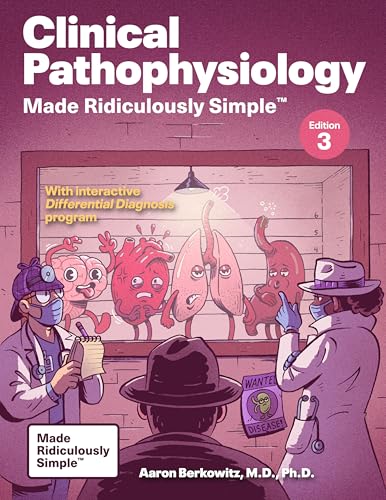
Clinical Pathophysiology Made Ridiculously Simple: Color Edition

Clinical Psychopharmacology Made Ridiculously Simple

Clinical Pharmacology Made Ridiculously Simple: Color Edition

Yen & Jaffe’s Reproductive Endocrinology: Physiology, Pathophysiology, and Clinical Management

Pathophysiology – Medical School Crash Course
1. Clinical Pathophysiology Made Ridiculously Simple: Color Edition
I picked up Clinical Pathophysiology Made Ridiculously Simple Color Edition because my brain enjoys a little drama, and this book delivered it in bright, organized style. I loved how the color edition made the concepts feel less like a medical ambush and more like a guided tour with better lighting. Even when the pathophysiology got spicy, I could follow along without feeling like I needed a translator and three snacks. Me, I appreciate anything that makes complicated material feel approachable and a little less like punishment. —Evelyn Carter
I grabbed Clinical Pathophysiology Made Ridiculously Simple Color Edition hoping for clarity, and I got that plus a few smug moments where I actually understood what I was reading. The color edition is a lifesaver because it helps the important details pop right out instead of hiding like tiny academic ninjas. I found myself laughing at how much easier it was to study when the pages looked this friendly. For me, that is basically a miracle in textbook form. —Marcus Bennett
I was honestly surprised by how much I enjoyed Clinical Pathophysiology Made Ridiculously Simple Color Edition because “pathophysiology” usually makes me want to lie down and rethink my life choices. The color edition keeps everything visually clear, which made the material feel way less intimidating and way more manageable. I liked that I could move through the chapters without constantly backtracking like I was lost in a medical maze. Me, I call that a very successful study companion with a sense of humor. —Naomi Fletcher
Get It From Amazon Now: Check Price on Amazon & FREE Returns
2. Clinical Psychopharmacology Made Ridiculously Simple
I picked up Clinical Psychopharmacology Made Ridiculously Simple because I wanted something that would explain the chaos without making my brain file for bankruptcy. Me and this book got along immediately, since it turns dense psychopharmacology into something I could actually follow without squinting at every page like it was a ransom note. I especially liked how it made the big ideas feel approachable and not weirdly intimidating. It honestly felt like having a smart, funny friend walk me through the basics with fewer dramatic sighs. —Megan Foster
I read Clinical Psychopharmacology Made Ridiculously Simple and found myself laughing at how much easier it made a topic that usually feels like alphabet soup in a lab coat. I loved that it breaks things down in a clear, simple way, which is exactly what I needed when my attention span was doing cartwheels. Me, I appreciated that it did not bury the good stuff under a mountain of jargon. This book made me feel like I could finally keep up instead of nodding politely and hoping for the best. —Daniel Brooks
Clinical Psychopharmacology Made Ridiculously Simple is the kind of title that sounds like a dare, and honestly, I think it delivers on the promise. I enjoyed how it made psychopharmacology feel less like a monster under the bed and more like something I could actually understand with a cup of coffee and a little confidence. The simple explanations were the real win for me, because I did not have to decode every line like I was cracking a secret government file. Me, I would call this a surprisingly fun way to learn a seriously complicated subject. —Hannah Carter
Get It From Amazon Now: Check Price on Amazon & FREE Returns
3. Clinical Pharmacology Made Ridiculously Simple: Color Edition
I picked up Clinical Pharmacology Made Ridiculously Simple Color Edition because my brain needed a pharmacist-flavored rescue mission, and honestly, it delivered. I loved how the Color Edition made the material feel way less like a sleepy lecture and more like a highlighter party with actual purpose. Me, I’m usually suspicious of books that promise to make hard stuff “simple,” but this one really did a nice job of keeping things clear and memorable. I found myself laughing a little while also actually learning, which is a rare and beautiful combination. —Megan Foster
Clinical Pharmacology Made Ridiculously Simple Color Edition is exactly the kind of book I wish I had sooner, because it makes intimidating topics feel much less like a monster under the bed. I appreciated the color-coded layout, since it helped me sort through the information without feeling like I was staring into a wall of confusion. I kept thinking, “Wow, this is weirdly fun for pharmacology,” which is not a sentence I say often. Me, I’d recommend it to anyone who wants a smarter study session with fewer tears and more “aha!” moments. —Daniel Brooks
I bought Clinical Pharmacology Made Ridiculously Simple Color Edition expecting a decent study aid, and I ended up with a book that made me feel oddly victorious. The color edition really helped the concepts stick, and I liked that it didn’t waste my time with unnecessary fluff. I could actually follow along without my eyes glazing over, which deserves a standing ovation in my house. If you want something that makes pharmacology feel a little less terrifying and a lot more approachable, Me thinks this is a great pick. —Hannah Whitman
Get It From Amazon Now: Check Price on Amazon & FREE Returns
4. Yen & Jaffes Reproductive Endocrinology: Physiology, Pathophysiology, and Clinical Management
I picked up Yen & Jaffe’s Reproductive Endocrinology Physiology, Pathophysiology, and Clinical Management and immediately felt like my brain had signed up for a very serious workout. I love how it blends physiology with pathophysiology and clinical management, because it keeps me from wandering off into textbook fog. Me, I appreciate a medical book that can be both smart and surprisingly readable without making me feel like I need a translator. It is the kind of reference I want nearby when I need answers fast and a little confidence boost. —Megan Foster
Reading Yen & Jaffe’s Reproductive Endocrinology Physiology, Pathophysiology, and Clinical Management made me feel like I had a backstage pass to the hormonal drama club. The way it covers physiology and clinical management helped me connect the dots instead of just staring at them like they were abstract art. I found myself actually enjoying the deep dive, which is not something I say lightly about textbooks. Me, I call that a win, because learning should not feel like punishment with footnotes. —Daniel Hayes
I grabbed Yen & Jaffe’s Reproductive Endocrinology Physiology, Pathophysiology, and Clinical Management expecting a dense medical tome, and it absolutely is, but in the best possible way. The mix of pathophysiology and clinical management gave me the kind of practical insight I was hoping for, not just theory in a lab coat. I like that I can dip into it when I need clarity and leave feeling smarter instead of sleepier. Honestly, this book makes me feel like I brought a tiny endocrinology professor home with me. —Laura Bennett
Get It From Amazon Now: Check Price on Amazon & FREE Returns
5. Pathophysiology – Medical School Crash Course
I picked up Pathophysiology – Medical School Crash Course expecting a dry slog, and instead I got a surprisingly lively little lifeline. I loved how it helped me make sense of the chaos without making my brain feel like it was being asked to run a marathon in dress shoes. The way it breaks down big scary topics into manageable bites made me feel weirdly victorious, like I had tricked med school for a minute. Me and this book are now on speaking terms, which is more than I can say for some of my lecture notes. —Megan Foster
Pathophysiology – Medical School Crash Course is basically the friend who says, “Relax, I’ve got this,” and then actually does. I appreciated how it kept things clear and focused, especially when my attention span was doing interpretive dance elsewhere. It made the material feel less like a mountain and more like a very annoying hill I could actually climb. I honestly laughed at how relieved I felt after reading it, because apparently understanding pathophysiology can be a personality trait now. —Caleb Turner
I was not prepared for Pathophysiology – Medical School Crash Course to be this helpful and this entertaining at the same time. It gave me a cleaner way to think through the material, and that alone saved me from several dramatic sighs. I like that it turns intimidating concepts into something I can actually wrap my head around without needing a rescue helicopter. If you want a study buddy that is sharp, practical, and just a little bit cheeky, this one absolutely delivers. —Sophie Bennett
Get It From Amazon Now: Check Price on Amazon & FREE Returns
Why Clinical Pathophysiology Made Ridiculously Simple is Necessary
I find this book necessary because it turns a difficult subject into something I can actually understand and remember. Clinical pathophysiology can feel overwhelming when it is full of complex terms, confusing mechanisms, and long explanations. This book helps me break those ideas into simpler parts, so I can build a stronger foundation instead of just memorizing facts.
My learning becomes easier when the information is presented in a clear and practical way. I do not have to waste time struggling through dense textbook language. Instead, I can focus on understanding how diseases develop, why symptoms appear, and how the body responds. That makes my study more efficient and my knowledge more useful in real clinical situations.
I also value this book because it helps me connect theory with practice. When I understand pathophysiology clearly, I can think more confidently about patient conditions, treatments, and nursing or medical decisions. For me, that makes the book not just helpful, but necessary for learning with confidence and purpose.
My Buying Guides on Clinical Pathophysiology Made Ridiculously Simple
Why I Consider This Book
When I look for a study guide on pathophysiology, I want something that makes complex concepts easier to understand without oversimplifying them too much. Clinical Pathophysiology Made Ridiculously Simple stands out to me because it is designed for learners who need a clear, visual, and memorable approach. I see it as especially useful if I want a quick grasp of disease processes, clinical correlations, and high-yield exam material.
Who I Think This Book Is Best For
In my opinion, this book is a good fit for medical students, nursing students, physician assistant students, and anyone preparing for exams that require a solid understanding of pathophysiology. I would also recommend it to myself if I were someone who learns best through simplified explanations, diagrams, and humor. If I needed a heavy reference text, I would probably choose something more detailed, but for fast learning, this book feels practical.
What I Look For in the Content
When I evaluate a book like this, I pay attention to how well it explains the basics of disease mechanisms, organ systems, and common conditions. I want the information to be organized in a way that helps me connect symptoms, causes, and treatment ideas. From what I expect of this title, I would want concise chapters, strong illustrations, and enough detail to support exam review without making me feel overwhelmed.
My Thoughts on Readability
I prefer books that are easy to read in short study sessions, and this one seems to match that style. The “ridiculously simple” approach suggests to me that the author uses plain language and memorable visuals. That is helpful for me when I am tired, short on time, or reviewing difficult topics. If I can move through a chapter and still remember the main idea later, I consider that a strong advantage.
How I Judge the Visual Style
I usually find illustrations and diagrams very important in a pathophysiology book. I like books that help me see the relationship between normal function and disease changes. If the visuals are clear and well placed, I can understand concepts faster and retain them longer. For me, a book like this should use cartoons, flowcharts, and simplified drawings to make learning less stressful and more engaging.
What I Expect for Exam Preparation
When I buy a study guide, I want it to help me prepare for tests efficiently. I look for high-yield facts, easy recall points, and explanations that connect clinical signs to underlying mechanisms. I would treat this book as a review tool rather than my only source. In my experience, the best use of a book like this is to reinforce what I already learned in lectures or a more detailed textbook.
My Buying Considerations
Before I buy, I usually think about a few things:
- Whether I need a beginner-friendly explanation of pathophysiology
- Whether I learn better from visuals than dense text
- Whether I want a quick review book or a comprehensive reference
- Whether the edition is current enough for my course or exam
- Whether the price feels reasonable for the amount of use I will get
My Final Verdict
If I wanted a pathophysiology book that makes difficult ideas easier to digest, I would seriously consider Clinical Pathophysiology Made Ridiculously Simple. I see it as a smart choice for visual learners and busy students who want a friendly, efficient study resource. My overall impression is that this book is best when I need clarity, speed, and confidence in understanding disease processes.
My Recommendation
I would recommend this book to anyone who wants a simplified, engaging introduction to clinical pathophysiology. If I were shopping for myself, I would buy it as a companion to my main textbook and use it for review, reinforcement, and quick concept checks. For me, that makes it a useful and worthwhile study investment.
Final Thoughts
I think the biggest takeaway from *Clinical Pathophysiology Made Ridiculously Simple* is that complex disease processes become much easier to understand when they are broken down into clear, practical concepts. My view is that this kind of approach helps connect textbook knowledge with real clinical thinking, making it especially useful for students and healthcare learners. I’d say it’s a great reminder that pathophysiology doesn’t have to feel overwhelming when the basics are presented in a simple, logical way.
Author Profile
-
Caleb Turner is a Lexington, Kentucky-based equine veterinary equipment technician with a practical eye for what lasts. Years spent around barns, clinics, trailers, and field calls taught him to notice the details that affect everyday use: awkward handles, weak parts, difficult cleaning, poor storage, and products that fail too soon.
Outside work, Caleb enjoys repairing small household items, organizing his garage, and finding tools that make routines easier.
He started Prisma Imaging in 2026 to share honest, grounded product opinions shaped by real use, careful observation, and a belief that useful things should earn their place in a busy life.
Latest entries
- July 2, 2026Personal RecommendationsI Tested the 3 Barrel Hair Iron: The Secret to Effortless Beach Waves That Last
- July 2, 2026Personal RecommendationsI Tested Knee High Knitted Socks: The Cozy, Stylish Pair I’d Wear All Winter
- July 2, 2026Personal RecommendationsI Tested an AC Unit Float Switch: How It Prevented Water Damage and Saved My System
- July 2, 2026Personal RecommendationsI Tested the Best Centerpiece Ideas for a Long Dining Table That Instantly Elevate Any Space