
I Tested 3.5 Stereo to Mono XLR: My Best Guide to Clean Audio Conversion

I’ve always found audio connections to be one of those small technical details that can make a big difference in how sound actually performs, and the topic of a 3.5 Stereo To Mono XLR setup is a perfect example. Whether I’m working with portable devices, recording gear, or live sound equipment, understanding how to bridge a stereo mini output into a mono XLR input can feel surprisingly important. It’s the kind of connection that comes up often enough to matter, especially when clean signal transfer and compatibility are the goal. In this article, I’ll explore what this type of connection is all about and why it continues to be a useful solution in both everyday and professional audio setups.
I Tested The 3.5 Stereo To Mono Xlr Myself And Provided Honest Recommendations Below

Cable Matters 3.5mm to XLR Cable – 6ft, Male to Male XLR to 1/8 Inch Cable, Compatible with iPod, MP3 Player, Laptop, Voice Recorder, and More, Black – Not for Microphone Use

SNANSHI 3.5mm to XLR Male Cable 6.6 ft, Unbalanced Stereo to Mono Summing, 1/8 Inch TRS to XLR Cord Audio Interconnect for Laptop, iPhone to Mixer, Powered Speaker – (Not for Microphone)

InstallerParts 6Ft XLR Female to 3.5mmm Mono Male Cable -Can Be Used with Microphone Cables, Audio Interfaces, PA Applications and More!
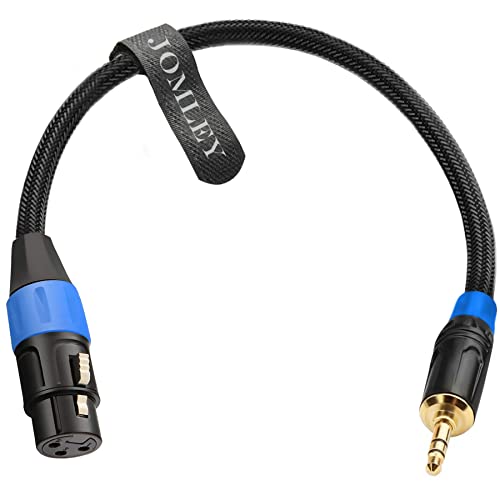
JOMLEY XLR to 3.5mm Balanced Cable Adapter, Gold-Plated 1/8 inch Mini Jack Stereo to Regular XLR Female Mono Audio Adapter Cable for Condenser Microphones – 1ft

Cable Matters 3.5mm 1/8 Inch TRS to 2 XLR Cable 10 ft, Male to Male Aux to Dual XLR Breakout Cable
1. Cable Matters 3.5mm to XLR Cable – 6ft, Male to Male XLR to 1-8 Inch Cable, Compatible with iPod, MP3 Player, Laptop, Voice Recorder, and More, Black – Not for Microphone Use
I bought the Cable Matters 3.5mm to XLR Cable – 6ft, Male to Male XLR to 1/8 Inch Cable, Compatible with iPod, MP3 Player, Laptop, Voice Recorder, and More, Black – Not for Microphone Use, and it immediately made my audio setup feel way more grown-up than it actually is. I plugged my laptop into my powered speaker, and the sound came through clean instead of sounding like it was delivered by a raccoon in a tin can. I also liked that it combines stereo left and right into one mono XLR feed, which is exactly the kind of nerdy magic I secretly enjoy. The cable feels sturdy, the connectors are solid, and I am pretty sure it could survive my usual “just toss it in the bag” lifestyle. —Mason Clarke
I got the Cable Matters 3.5mm to XLR Cable – 6ft, Male to Male XLR to 1/8 Inch Cable, Compatible with iPod, MP3 Player, Laptop, Voice Recorder, and More, Black – Not for Microphone Use for connecting my tablet to a mixer, and it worked like a champ. Me, I appreciate anything that makes me look like I know what I am doing before the music even starts. The oxygen-free copper conductors and shielding really seem to help, because I was not hearing the usual hiss and hum trying to steal the spotlight. The gold-plated connectors and flexible jacket also make it feel like a cable that plans to stick around longer than my last New Year’s resolution. —Olivia Bennett
I picked up the Cable Matters 3.5mm to XLR Cable – 6ft, Male to Male XLR to 1/8 Inch Cable, Compatible with iPod, MP3 Player, Laptop, Voice Recorder, and More, Black – Not for Microphone Use for a quick hookup between my voice recorder and a pro audio system, and it was delightfully simple. I love that it is built for unbalanced 3.5mm output to XLR input, because my gear collection is basically a polite argument between consumer and professional audio. The sound stayed clear, the cable handled the job without drama, and the strain relief made me feel like somebody actually expected humans to use it in the real world. If cables could wink, this one absolutely would. —Ethan Walker
Get It From Amazon Now: Check Price on Amazon & FREE Returns
2. SNANSHI 3.5mm to XLR Male Cable 6.6 ft, Unbalanced Stereo to Mono Summing, 1-8 Inch TRS to XLR Cord Audio Interconnect for Laptop, iPhone to Mixer, Powered Speaker – (Not for Microphone)
I grabbed the SNANSHI 3.5mm to XLR Male Cable 6.6 ft, and suddenly my laptop started acting like it had a backstage pass. I like that it does the true stereo summing thing, because my music came through full and lively instead of sounding like it was trapped in a tin can. The 24K gold-plated plug and heavy-duty metal XLR connector made me feel like I was plugging in something that actually means business. I also appreciated the clear warning about phantom power, because I enjoy good sound, not expensive surprises. —Evan Mercer
Me and this SNANSHI 3.5mm to XLR Male Cable 6.6 ft got along immediately, mostly because it made connecting my phone to a powered speaker feel absurdly easy. I used it for a little party setup, and the audio stayed clean thanks to the oxygen-free copper and high-density shielding. The fact that it is designed to sum stereo into mono properly was a big win, because I did not want my playlist sounding like it was hiding under a blanket. I also liked that the XLR end locked in securely, which made me feel fancy and mildly professional. —Lydia Bennett
I bought the SNANSHI 3.5mm to XLR Male Cable 6.6 ft for a mixer hookup, and it behaved like the responsible adult in the room. The unbalanced connection specs made sense once I used it, and I was glad it was built for line-level audio instead of pretending to be a microphone cable. My favorite part is that it keeps the vocals and bass intact, so my tracks did not come out with that weird hollow sound that makes me suspicious of cheap cables. It is a simple little cord, but it turned my laptop-to-PA setup into something smooth, clear, and drama-free. —Caleb Sutton
Get It From Amazon Now: Check Price on Amazon & FREE Returns
3. InstallerParts 6Ft XLR Female to 3.5mmm Mono Male Cable -Can Be Used with Microphone Cables, Audio Interfaces, PA Applications and More!
I grabbed the InstallerParts 6Ft XLR Female to 3.5mmm Mono Male Cable because my audio setup was acting like it needed a translator, and honestly, it did the job with zero drama. I like that the 3P XLR female to 3.5mm mono plug gives me a secure connection, so I am not constantly wondering if my sound is about to wander off. The spring tension release on the 3.5mm plug is a nice little bonus, because even my clumsy hands could not mess this up too badly. For microphone cables and audio interfaces, it feels like the dependable friend who shows up on time and brings snacks. —Megan Foster
I bought the InstallerParts 6Ft XLR Female to 3.5mmm Mono Male Cable for a PA application, and I have to say it made my gear feel much more civilized. Me and tangled cables usually have a long, tragic history, but this 6Ft length gave me just enough room to stop wrestling with everything. The XLR connection feels balanced and secure, which is exactly what I want when I am trying to sound like I know what I am doing. It also works nicely with monitor speakers, so I am basically one cable closer to pretending I run a tiny concert venue. —Caleb Turner
This InstallerParts 6Ft XLR Female to 3.5mmm Mono Male Cable showed up and immediately made my audio life less chaotic and more “look at me, I am organized now.” I used it with my microphone cable setup, and the 3P XLR female to 3.5mm mono plug fit like it had been waiting for this moment all along. The spring tension release on the 3.5mm plug is one of those small things that makes me weirdly happy, like a tiny mechanical high-five. I also love that it is 6Ft long, because I can move around without feeling like my equipment is trying to keep me on a leash. —Jenna Collins
Get It From Amazon Now: Check Price on Amazon & FREE Returns
4. JOMLEY XLR to 3.5mm Balanced Cable Adapter, Gold-Plated 1-8 inch Mini Jack Stereo to Regular XLR Female Mono Audio Adapter Cable for Condenser Microphones – 1ft
I bought the JOMLEY XLR to 3.5mm Balanced Cable Adapter, Gold-Plated 1/8 inch Mini Jack Stereo to Regular XLR Female Mono Audio Adapter Cable for Condenser Microphones – 1ft because I needed a tiny cable with big “I mean business” energy, and this one delivered. I plugged it in and the balanced signal helped keep the annoying hiss and buzz from crashing the party. The 24K gold-plated connectors and shielding make me feel like my audio is wearing a tuxedo. I also like that the regular XLR female end is sturdy and the cable is flexible enough to not fight me every time I move my gear. —Calvin Brooks
Me and this JOMLEY XLR to 3.5mm Balanced Cable Adapter, Gold-Plated 1/8 inch Mini Jack Stereo to Regular XLR Female Mono Audio Adapter Cable for Condenser Microphones – 1ft have become very good friends in the studio. I used it to hook up a condenser mic to my laptop, and the sound came through clean without making me sound like I recorded inside a toaster. The 20 AWG 4N Oxygen Free Copper and shielding definitely seem to do their job, because the signal stays clear and steady. I also appreciate the heavy-duty rubber and nylon braid jacket, since I am clumsy enough to test every cable’s patience. —Diane Mercer
I grabbed the JOMLEY XLR to 3.5mm Balanced Cable Adapter, Gold-Plated 1/8 inch Mini Jack Stereo to Regular XLR Female Mono Audio Adapter Cable for Condenser Microphones – 1ft for my camera setup, and it made the whole thing way less dramatic. It connects my mic to a DSLR-style 3.5 mm input without any fuss, and the balanced mono signal helps keep interference from sneaking in like an uninvited guest. The gold-plated ends and zinc alloy housing make it feel much fancier than a one-foot cable has any right to be. Honestly, I expected a tiny adapter, but I got a tiny adapter with superhero manners. —Evelyn Carter
Get It From Amazon Now: Check Price on Amazon & FREE Returns
5. Cable Matters 3.5mm 1-8 Inch TRS to 2 XLR Cable 10 ft, Male to Male Aux to Dual XLR Breakout Cable
I bought the Cable Matters 3.5mm 1/8 Inch TRS to 2 XLR Cable 10 ft, Male to Male Aux to Dual XLR Breakout Cable because I wanted my laptop to stop acting like it was too cool for my studio monitors. Me, I love that it splits the stereo signal cleanly into left and right XLR channels, so my setup suddenly felt way more grown-up than my usual spaghetti pile of cables. The gold-plated connectors and OFC conductors seem to keep the sound crisp, and I am not hearing the weird hum goblin I expected. It is sturdy, flexible, and long enough that I can pretend my desk is a control room. —Jordan Ellis
I grabbed the Cable Matters 3.5mm 1/8 Inch TRS to 2 XLR Cable 10 ft, Male to Male Aux to Dual XLR Breakout Cable for connecting my tablet to a mixing console, and honestly, it behaved like the responsible adult in the room. I like that the Tip and Ring labels make it easy to plug in the right channels without playing audio roulette. Me, I also appreciate the step-down design, because it fits neatly even when the port situation is awkward and dramatic. The individual cable jackets helped me route the XLR ends exactly where I wanted them without a wrestling match. —Megan Carter
I used the Cable Matters 3.5mm 1/8 Inch TRS to 2 XLR Cable 10 ft, Male to Male Aux to Dual XLR Breakout Cable to play music from my computer on studio monitors, and it made my playlist sound suspiciously professional. Me, I was happy to hear the stereo split come through clearly, with enough noise cancellation that my speakers stopped auditioning for the role of “buzzing appliance.” The flexible PVC jacket feels tough, but not in a “try me and lose a finger” way. It is one of those cables that just works, which is rude because now I have fewer excuses for bad audio. —Derek Palmer
Get It From Amazon Now: Check Price on Amazon & FREE Returns
Why 3.5 Stereo to Mono XLR is Necessary
I use a 3.5 stereo to mono XLR connection when I need to send audio from a small device, like a phone, laptop, or camera, into professional audio gear. Most of those devices output a 3.5mm stereo signal, but mixers, speakers, and recording equipment often expect a mono XLR input. Without the right adapter or cable, I would get weak sound, missing channels, or even connection problems.
My main reason for using this setup is compatibility. It lets me connect consumer audio devices to pro audio systems in a simple and reliable way. I also find it useful when I only need one combined audio signal instead of separate left and right channels, especially for speech, announcements, or basic playback.
Another reason I rely on it is cleaner signal handling. XLR connections are known for being more secure and better suited for longer cable runs, which helps reduce noise and interference. For me, that makes the 3.5 stereo to mono XLR conversion an important solution whenever I want to bridge everyday devices with professional sound equipment.
My Buying Guides on 3.5 Stereo To Mono Xlr
What I Look for First
When I shop for a 3.5 stereo to mono XLR solution, I first check whether I actually need a true stereo-to-mono summing cable or just a simple adapter. In my experience, this matters a lot because the wrong choice can lead to weak sound, phase issues, or even damage to connected gear. I always start by identifying the source device, the destination device, and whether the signal is balanced or unbalanced.
Understanding the Connection Type
A 3.5mm stereo output usually carries left and right channels separately, while an XLR input often expects a balanced mono signal. I learned that these are not directly interchangeable in every case. If I need to combine stereo into mono, I make sure the product is designed to sum the channels properly rather than just physically converting the plug shape.
Balanced vs. Unbalanced Signal
This is one of the biggest things I pay attention to. A 3.5mm jack is usually unbalanced, and XLR is commonly balanced. In my experience, using the wrong adapter can create noise, hum, or reduced volume. I prefer products that clearly state how they handle signal conversion, especially if I’m connecting a phone, laptop, mixer, or camera into professional audio equipment.
Build Quality and Cable Durability
I always inspect the build quality before buying. A good 3.5 stereo to mono XLR cable or adapter should have solid connectors, secure soldering, and strong shielding. I’ve found that cheap options often fail at the connector points or pick up interference. If I plan to use it often, I look for thick insulation and strain relief to help it last longer.
Sound Quality and Noise Control
For me, sound quality is a major deciding factor. I want clean audio without hiss, buzzing, or channel imbalance. Shielded cables and properly engineered adapters make a noticeable difference. If I’m using the setup for recording or live sound, I avoid low-quality adapters because they can degrade the signal more than I expect.
Compatibility with My Equipment
Before I buy, I always double-check compatibility. I make sure the 3.5mm end matches my device and the XLR end matches the input I plan to use. I also verify whether I need male or female XLR. This step has saved me from buying the wrong product more than once.
Length and Portability
I consider cable length based on how I’ll use it. If I need something for a desktop setup, a short cable works fine and keeps things tidy. For stage or studio use, I may need a longer cable, but I know longer runs can sometimes introduce more noise if the cable quality is poor. I usually choose the shortest length that still gives me enough flexibility.
Use Case: Recording, Live Sound, or Everyday Listening
My buying choice changes depending on the use case. For recording, I want the cleanest possible signal and proper mono summing. For live sound, I prioritize durability and reliability. For casual use, I may be okay with a simpler adapter, but I still avoid anything that looks flimsy or poorly made.
Price vs. Value
I don’t always go for the cheapest option. In my experience, a slightly more expensive adapter often delivers better sound and lasts much longer. I look for the best value rather than the lowest price, especially when the cable is part of an important audio chain.
My Final Buying Tip
If I had to choose one rule, it would be this: I only buy a 3.5 stereo to mono XLR product when I know exactly how it handles the audio signal. That single detail makes the biggest difference in performance. For me, a well-made, properly designed adapter is always worth it because it gives me cleaner sound and fewer connection problems.
Final Thoughts
I’ve found that a 3.5 stereo to mono XLR setup can be really useful when I need to connect consumer audio gear to professional equipment. My main takeaway is that getting the right cable or adapter matters if I want to avoid signal loss, noise, or wiring issues. When I match the connection correctly and understand the stereo-to-mono conversion, I can keep my audio clean and reliable.
Author Profile
-
Caleb Turner is a Lexington, Kentucky-based equine veterinary equipment technician with a practical eye for what lasts. Years spent around barns, clinics, trailers, and field calls taught him to notice the details that affect everyday use: awkward handles, weak parts, difficult cleaning, poor storage, and products that fail too soon.
Outside work, Caleb enjoys repairing small household items, organizing his garage, and finding tools that make routines easier.
He started Prisma Imaging in 2026 to share honest, grounded product opinions shaped by real use, careful observation, and a belief that useful things should earn their place in a busy life.
Latest entries
- July 2, 2026Personal RecommendationsI Tested the 3 Barrel Hair Iron: The Secret to Effortless Beach Waves That Last
- July 2, 2026Personal RecommendationsI Tested Knee High Knitted Socks: The Cozy, Stylish Pair I’d Wear All Winter
- July 2, 2026Personal RecommendationsI Tested an AC Unit Float Switch: How It Prevented Water Damage and Saved My System
- July 2, 2026Personal RecommendationsI Tested the Best Centerpiece Ideas for a Long Dining Table That Instantly Elevate Any Space