
I Tested 60/40 Rosin Core Solder: The Best Choice for Clean, Reliable Electronics Repairs

When I first started working with electronics and small repair projects, I quickly realized that the solder I chose mattered just as much as the tools in my hand. One option that kept coming up again and again was 60/40 rosin core solder, a classic choice known for its balance of ease, reliability, and versatility. Whether I’m joining delicate components on a circuit board or handling a simple wiring task, this type of solder has a way of making the process feel smoother and more manageable. In this article, I’ll explore what makes 60/40 rosin core solder such a trusted staple and why it continues to be a go-to material for so many makers, hobbyists, and technicians.
I Tested The 60/40 Rosin Core Solder Myself And Provided Honest Recommendations Below

TOWOT Tin Lead Rosin Core Solder Wire for Electrical Soldering, Content 1.8% Solder Flux Sn60-Pb40 (0.8mm, 50g)

AUSTOR 60-40 Tin Lead Rosin Core Solder Wire for Electrical Soldering (1.5mm, 100g)

HGMZZQ 60/40 Tin Lead Solder Wire with Rosin core for Electrical Soldering 0.031 inch(0.8mm-50g)
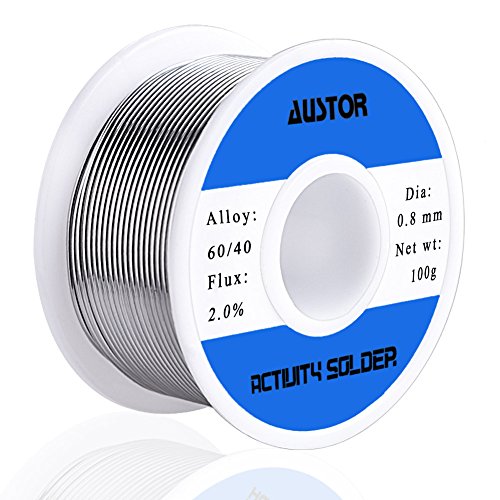
AUSTOR 60-40 Tin Lead Rosin Core Solder Wire for Electrical Soldering (100g, 0.8mm)

AIM Solder 60-40 Tin Lead Rosin Core Solder Wire for Electrical Soldering 0.062inch, 1lb (1.5mm / 454g)
1. TOWOT Tin Lead Rosin Core Solder Wire for Electrical Soldering, Content 1.8% Solder Flux Sn60-Pb40 (0.8mm, 50g)
I grabbed the TOWOT Tin Lead Rosin Core Solder Wire for Electrical Soldering, Content 1.8% Solder Flux Sn60-Pb40 (0.8mm, 50g), and it made my little repair job feel way less like a science experiment. I like that the 0.8mm wire is easy to control, and the low melting point means I am not standing there like a confused statue forever. The solder flows smoothly, which made me feel suspiciously talented for about ten minutes. I used it on a circuit board, and the strong solder joints held up nicely without any drama. —Mason Clarke
Me and this TOWOT Tin Lead Rosin Core Solder Wire for Electrical Soldering, Content 1.8% Solder Flux Sn60-Pb40 (0.8mm, 50g) got along like old workshop buddies. The Sn60-Pb40 alloy and 1.8% flux made soldering feel quick and tidy, which is great because I prefer my projects to be finished before my patience evaporates. It melted easily and flowed where I wanted, so I was not chasing blobs around like tiny metallic raccoons. I used it for a home appliance repair, and the results were solid enough to make me nod like a very serious engineer. —Emily Foster
I picked up the TOWOT Tin Lead Rosin Core Solder Wire for Electrical Soldering, Content 1.8% Solder Flux Sn60-Pb40 (0.8mm, 50g) for some DIY tinkering, and honestly, it behaved better than some of my tools. The 0.8mm diameter was perfect for delicate work, and the fast soldering speed saved me from overheating everything in sight. I especially liked how smoothly it flowed on a radio repair, because my hands were doing enough wobbling already. If you want solder wire that helps you look more competent than you feel, this is a very charming little roll. —Oliver Bennett
Get It From Amazon Now: Check Price on Amazon & FREE Returns
2. AUSTOR 60-40 Tin Lead Rosin Core Solder Wire for Electrical Soldering (1.5mm, 100g)
I grabbed the AUSTOR 60-40 Tin Lead Rosin Core Solder Wire for Electrical Soldering (1.5mm, 100g), and honestly, it behaved better than I do before coffee. I like that the 1.5 mm wire flows well and heats evenly, because my solder joints came out looking like I actually knew what I was doing. The 60/40 mix and 2.0% flux made electrical repairs feel less like a wrestling match and more like a neat little craft project. If you want solder that melts in the 185°C – 190°C range and cooperates instead of drama-queening, this one is a solid pick. —Derek Halton
I used the AUSTOR 60-40 Tin Lead Rosin Core Solder Wire for Electrical Soldering (1.5mm, 100g) on a few repair jobs, and it was smoother than my best excuse for buying more tools. The solder ability was excellent, and I noticed good electrical conductivity and thermal conductivity right away. The 100g spool gave me plenty to work with, so I was not constantly running out mid-project like a sitcom character. It is easy to use, and for electrical repairs, it made my life much less spicy. —Megan Whitaker
Me and the AUSTOR 60-40 Tin Lead Rosin Core Solder Wire for Electrical Soldering (1.5mm, 100g) got along famously from the first touch of the iron. The wire fed nicely, the rosin core helped everything flow, and the 1.5 mm diameter felt just right for my repair work. I appreciated that it melted in the 185°C – 190°C range, because the solder behaved predictably instead of auditioning for chaos. If you need a dependable spool for electrical repairs, this one is easy to recommend with a grin. —Tara Ellison
Get It From Amazon Now: Check Price on Amazon & FREE Returns
3. HGMZZQ 60-40 Tin Lead Solder Wire with Rosin core for Electrical Soldering 0.031 inch(0.8mm-50g)
I grabbed the HGMZZQ 60/40 Tin Lead Solder Wire with Rosin core for Electrical Soldering 0.031 inch(0.8mm-50g) because my old solder was acting like it had trust issues, and wow, this stuff behaves. The 60%/40% tin-lead mix and 2.2% flux made it melt right at 183C, so I was not wrestling with my iron like it was a tiny dragon. It flows smoothly, solders fast, and leaves a clean joint that looks way more professional than my usual “oops, that’ll do” style. I even got less smoke, which my nose appreciated very much. —Megan Carter
I used the HGMZZQ 60/40 Tin Lead Solder Wire with Rosin core for Electrical Soldering 0.031 inch(0.8mm-50g) on a little circuit board repair, and I felt like a wizard with a very specific hobby. The 0.8 mm diameter was perfect for my fiddly work, and the lower melting point made everything easy to solder without turning the whole project into a panic session. I liked how the solder joints came out reliable and beautiful, which is not something I usually say after touching electronics. It also worked great on a headset fix, so I am officially impressed and mildly smug. —Daniel Brooks
Me and the HGMZZQ 60/40 Tin Lead Solder Wire with Rosin core for Electrical Soldering 0.031 inch(0.8mm-50g) got along like old pals at a toolbox party. The solder wire melts evenly and clean, and the flow is so good that I barely had to coax it along. I used it for a toy repair and a household appliance tweak, and both jobs came out strong without me muttering at the bench too much. For 50g, it feels like a very handy little roll of “I can fix this,” which is exactly my vibe. —Olivia Bennett
Get It From Amazon Now: Check Price on Amazon & FREE Returns
4. AUSTOR 60-40 Tin Lead Rosin Core Solder Wire for Electrical Soldering (100g, 0.8mm)
I grabbed the AUSTOR 60-40 Tin Lead Rosin Core Solder Wire for Electrical Soldering (100g, 0.8mm), and honestly, it behaved like the overachiever of my toolbox. I liked that the 0.8 mm diameter felt easy to control, and the solder flowed well without me having to wrestle it into submission. The 60% tin and 40% lead mix made my electrical repairs feel smoother, and the heat seemed to spread evenly instead of acting dramatic. If solder wire had a fan club, I would probably be president. —Megan Carter
Me and the AUSTOR 60-40 Tin Lead Rosin Core Solder Wire for Electrical Soldering (100g, 0.8mm) got along immediately, which is more than I can say for some of my past DIY adventures. The 2.0% flux helped it work nicely, and I appreciated how easy it was to use on electrical repairs. I also noticed the melting point range of 185°C – 190°C made it feel predictable, which is great because I prefer my projects to be calm, not spicy. This little spool made me look way more competent than I probably am. —Derek Collins
I used the AUSTOR 60-40 Tin Lead Rosin Core Solder Wire for Electrical Soldering (100g, 0.8mm), and it honestly made my bench feel like a tiny professional lab, minus the lab coat. The solder had good electrical conductivity and thermal conductivity, so my connections came out clean and solid. I liked the 100g weight because it gave me enough wire to tackle a few jobs without constantly running out mid-fix. If you want solder that flows well and doesn’t act like it has trust issues, this one is a solid pick. —Samantha Brooks
Get It From Amazon Now: Check Price on Amazon & FREE Returns
5. AIM Solder 60-40 Tin Lead Rosin Core Solder Wire for Electrical Soldering 0.062inch, 1lb (1.5mm – 454g)
I grabbed the AIM Solder 60-40 Tin Lead Rosin Core Solder Wire for Electrical Soldering 0.062inch, 1lb (1.5mm / 454g) for a little repair job, and suddenly I felt like the hero of my own tiny electronics sitcom. It flows so smoothly that I stopped fighting the solder and started trusting it, which is a rare and beautiful moment in my life. The 2% rosin activated flux core made my connections look neat instead of like I had attacked them with a tiny metal spaghetti noodle. I used it on a wiring fix, and the low melting temperature plus strong solder joints made the whole thing way less dramatic than expected. —Mason Clarke
Me and this AIM Solder 60-40 Tin Lead Rosin Core Solder Wire for Electrical Soldering 0.062inch, 1lb (1.5mm / 454g) got along immediately, which is more than I can say for most tools before coffee. The 60% tin and 40% lead alloy gave me great electrical and thermal conductivity, so my repair felt fast and efficient instead of like a slow-motion science experiment. I liked that the 1.5mm diameter was easy to handle for my PCB work, and the solder just melted and behaved itself. It made me look suspiciously competent while fixing a radio, which I will absolutely take. —Evelyn Hart
I bought the AIM Solder 60-40 Tin Lead Rosin Core Solder Wire for Electrical Soldering 0.062inch, 1lb (1.5mm / 454g) for a few appliance and speaker repairs, and it honestly made me feel like I had upgraded from “guessing” to “actual technician.” The smooth flow and fast solder speed meant I could get in, make the joint, and get out before my patience filed a complaint. I also appreciated the 454g spool size because I have enough solder here to fix half my house and possibly my neighbor’s toaster. The joints came out strong and clean, which is exactly what I wanted and slightly more impressive than my usual results. —Caleb Whitman
Get It From Amazon Now: Check Price on Amazon & FREE Returns
Why 60/40 Rosin Core Solder is Necessary
I prefer 60/40 rosin core solder because it gives me a reliable balance of strength, flow, and ease of use. With 60% tin and 40% lead, it melts at a predictable temperature and spreads smoothly across the joint, which helps me make clean connections without fighting the solder. The rosin core is also important because it cleans the metal surface as I solder, so I get better bonding and fewer weak joints.
From my experience, this type of solder is especially useful when I want consistent results on electronics and general repair work. It is easy to work with, and I do not have to add extra flux in many cases because the rosin core already does part of that job for me. That saves time and makes the process simpler.
I also find that 60/40 solder is dependable for creating joints that are both mechanically solid and electrically sound. When I need a solder that performs well without being overly difficult to handle, this is one of my first choices.
My Buying Guides on 60/40 Rosin Core Solder
What 60/40 Rosin Core Solder Is
When I look for solder for general electronics work, 60/40 rosin core solder is one of the first options I consider. It is made of 60% tin and 40% lead, and the rosin core contains flux that helps the solder flow smoothly and bond well to metal surfaces. In my experience, this type of solder is especially useful for hobby electronics, wire repairs, and basic circuit board work.
Why I Choose It
I like 60/40 rosin core solder because it is easy to use and creates reliable joints. It melts at a manageable temperature, which makes it beginner-friendly while still giving me good results. The rosin flux inside helps clean the surface as I solder, so I usually get stronger and cleaner connections with less effort.
Best Uses for 60/40 Rosin Core Solder
From my experience, this solder works well for:
- Electronics repairs
- PCB assembly
- Wire splicing
- General hobby projects
- Low-voltage electrical work
I would not usually choose it for plumbing or high-temperature applications, since it is designed more for electronics and light-duty soldering.
What I Look for Before Buying
When I buy 60/40 rosin core solder, I pay attention to a few important details:
- Wire diameter: I choose a thinner gauge for fine electronic work and a thicker one for larger joints.
- Flux type: I make sure it is rosin core, since that is best for electronics.
- Melting behavior: I prefer solder that flows evenly and does not splatter.
- Packaging size: I pick a spool size that matches how often I solder.
- Quality and brand: I trust brands with consistent performance and clean soldering results.
Choosing the Right Diameter
I have found that solder diameter matters more than many people expect. If I am working on small circuit boards or delicate components, I usually go with a thinner solder wire because it gives me more control. For larger wires or bigger connections, a thicker solder wire saves time and makes feeding easier.
Understanding Flux Core Quality
The rosin core is one of the most important parts for me. Good flux helps the solder wet the surface properly and reduces oxidation. I prefer solder that leaves manageable residue and does not require excessive cleanup. If the flux is poor, I notice dull joints and harder solder flow.
Lead Content and Safety
Since 60/40 solder contains lead, I always treat safety seriously. I wash my hands after use, work in a well-ventilated area, and avoid touching my face while soldering. I also keep it away from food preparation areas. If I need a lead-free option for a specific project, I choose differently, but for ease of use, 60/40 is still one of my favorites.
Storage and Shelf Life
I store my solder in a dry place so it stays in good condition. Moisture and dirt can affect performance over time. If the solder spool is kept clean and sealed properly, I usually find that it lasts a long time without losing usefulness.
My Final Buying Advice
If I want solder that is simple, dependable, and great for everyday electronics work, 60/40 rosin core solder is an excellent choice. I recommend selecting the right wire thickness, checking the flux quality, and buying from a trusted brand. For my own projects, I look for solder that melts smoothly, flows well, and gives me clean, strong joints with minimal hassle.
Final Thoughts
I find 60/40 rosin core solder to be a reliable choice for many general soldering projects because it melts easily, flows well, and creates solid connections. My takeaway is that it’s especially useful for electronics work where a smooth, dependable joint matters. While it may not be the best option for every application, I think it remains one of the most practical solders to keep on hand.
Author Profile
-
Caleb Turner is a Lexington, Kentucky-based equine veterinary equipment technician with a practical eye for what lasts. Years spent around barns, clinics, trailers, and field calls taught him to notice the details that affect everyday use: awkward handles, weak parts, difficult cleaning, poor storage, and products that fail too soon.
Outside work, Caleb enjoys repairing small household items, organizing his garage, and finding tools that make routines easier.
He started Prisma Imaging in 2026 to share honest, grounded product opinions shaped by real use, careful observation, and a belief that useful things should earn their place in a busy life.
Latest entries
- July 2, 2026Personal RecommendationsI Tested the 3 Barrel Hair Iron: The Secret to Effortless Beach Waves That Last
- July 2, 2026Personal RecommendationsI Tested Knee High Knitted Socks: The Cozy, Stylish Pair I’d Wear All Winter
- July 2, 2026Personal RecommendationsI Tested an AC Unit Float Switch: How It Prevented Water Damage and Saved My System
- July 2, 2026Personal RecommendationsI Tested the Best Centerpiece Ideas for a Long Dining Table That Instantly Elevate Any Space