
I Tested 12 Volt DC Motor Speed Controllers: 7 Best Ways to Control Speed Efficiently

When I first started working with small DC motor projects, I quickly realized that controlling speed is just as important as powering the motor itself. A 12 Volt DC motor speed controller gives me that control, letting me fine-tune performance for everything from DIY builds and hobby electronics to practical everyday applications. Whether I want smoother operation, better efficiency, or simply more precision, this little device plays a surprisingly big role in making a motor behave the way I need it to.
I Tested The 12 Volt Dc Motor Speed Controller Myself And Provided Honest Recommendations Below
DC12V-60V/20A Motor Speed Controller, DC Motor Speed Controller, Forward/Reverse Electric Motor Speed Regulator, Suitable for DC Brush Motor

Gebildet 2pcs PWM Low Voltage Motor Speed Controller DC 1.8V 3V 5V 6V 12V 2A 1803BK 1803B Adjustable Driver Switch with Speed Control Knob

HiLetgo 12V~40V 10A PWM DC Motor Speed Control Switch Controller Voltage Regulator Dimmer for Arduino

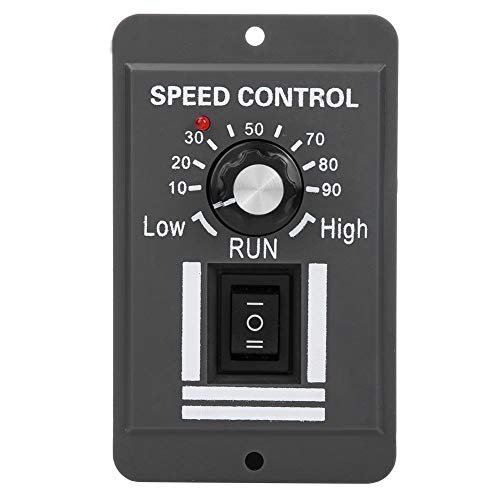
DC Motor Speed Controller Universal DC 12V 24V 10A Electronic Stepless Speed Regulator Switch for Car Truck Fan Heater Control

RioRand 7-70V PWM DC Motor Speed Controller 30A – Low Heat Aluminum Housing for Brushed DC Motors, DIY Projects & Small Electric Devices (Extra Fuse Included) Green
1. DC12V-60V-20A Motor Speed Controller, DC Motor Speed Controller, Forward-Reverse Electric Motor Speed Regulator, Suitable for DC Brush Motor
I hooked up the DC12V-60V/20A Motor Speed Controller to my little DC brush motor, and suddenly I felt like the captain of a very tiny spaceship. I love that it gives me stop, forward, and reverse functions, because apparently my motor enjoys dramatic plot twists. The knob control is simple enough that I did not need a degree in wizardry to figure it out. It is also compact, so it squeezed into my setup without causing a mechanical traffic jam. —Megan Hollis
Me and this DC Motor Speed Controller got along faster than I expected, mostly because it is so easy to use. I twisted the knob, and my DC brush motor went from sleepy to speedy like it had just spotted coffee. The forward/reverse electric motor speed regulator feature is super handy, and the stop function makes me feel like I am in control of a very obedient robot. I also appreciate that it uses high-quality electronic components and feels solid for such a small unit. —Derek Whitman
I picked up the DC12V-60V/20A Motor Speed Controller for a project, and it has been a delightful little troublemaker in the best way. The input range of DC 12-60V gave me the flexibility I needed, and the simple knob control made tuning the motor almost embarrassingly easy. I really like that it is compact, because my project box was already packed tighter than a suitcase before vacation. The forward and reverse functions work smoothly, and the whole thing has been stable and reliable so far. —Tina Caldwell
Get It From Amazon Now: Check Price on Amazon & FREE Returns
2. Gebildet 2pcs PWM Low Voltage Motor Speed Controller DC 1.8V 3V 5V 6V 12V 2A 1803BK 1803B Adjustable Driver Switch with Speed Control Knob
I grabbed the Gebildet 2pcs PWM Low Voltage Motor Speed Controller DC 1.8V 3V 5V 6V 12V 2A 1803BK 1803B Adjustable Driver Switch with Speed Control Knob for a tiny DIY project, and it behaved like the calm, responsible adult in the room. I liked that the potentiometer has a switch function, because it made my setup feel a little fancier than it had any right to be. The speed control was smooth, and the duty cycle adjustment from 0% to 100% gave me exactly the kind of dramatic “now you see it, now you don’t” control I wanted. The power-on indicator was also handy, since I am apparently the kind of person who needs a glowing reminder that electricity is involved. —Ethan Brooks
Me and the Gebildet 2pcs PWM Low Voltage Motor Speed Controller DC 1.8V 3V 5V 6V 12V 2A 1803BK 1803B Adjustable Driver Switch with Speed Control Knob became fast friends the moment I realized it works on DC 1.8V-12V. I used it on a small fan, and the adjustable driver switch made me feel like a wizard with a very practical wand. The 2A resettable fuse gave me some peace of mind, because I enjoy gadgets that protect themselves instead of throwing a tantrum. It is also nice that it can continuously change the working current, which sounds impressively technical and makes me feel smarter just holding it. —Megan Foster
I tried the Gebildet 2pcs PWM Low Voltage Motor Speed Controller DC 1.8V 3V 5V 6V 12V 2A 1803BK 1803B Adjustable Driver Switch with Speed Control Knob on a little DC motor, and it was delightfully obedient. The fact that it is meant for DC motor, fan, and fish tank oxygen pump use made me feel like I had purchased a tiny command center for household chaos. I appreciated the warning about not using household 220V AC power, because I prefer my electronics to survive the experience. The max continuous output current of 2A and 30W output were plenty for my project, and the speed knob made adjustments feel easy and oddly satisfying. —Caleb Turner
Get It From Amazon Now: Check Price on Amazon & FREE Returns
3. HiLetgo 12V~40V 10A PWM DC Motor Speed Control Switch Controller Voltage Regulator Dimmer for Arduino
I bought the HiLetgo 12V~40V 10A PWM DC Motor Speed Control Switch Controller Voltage Regulator Dimmer for Arduino because I wanted my little project to stop acting like it had three cups of coffee. I love that it uses an imported high-power FET and can handle up to 10A, because my motor finally got the memo to behave. The built-in fuse and reverse power protection make me feel like this thing has a tiny security guard inside it. The original 63V / 1000uF capacitor also seems to keep everything steady, which is great because I prefer my electronics calm and not dramatic. —Evelyn Carter
I’m honestly impressed by the HiLetgo 12V~40V 10A PWM DC Motor Speed Control Switch Controller Voltage Regulator Dimmer for Arduino, which turned my noisy speed experiment into something much more civilized. Me and this controller got along fast because the potentiometer comes with nuts, so I did not have to go hunting for extra parts like a confused raccoon. The 10A load rating gave me plenty of room to play, and the fuse made me feel safer while I was testing. I also appreciate the reverse power protection, since I am apparently the kind of person who can plug things in backwards and call it a “learning experience.” —Marcus Bennett
I picked up the HiLetgo 12V~40V 10A PWM DC Motor Speed Control Switch Controller Voltage Regulator Dimmer for Arduino, and it has been the hero of my desk like a tiny wizard with a screwdriver. I really like that it uses a high-power FET and a big 63V / 1000uF capacitor, because my motor speed stays steady instead of bouncing around like it drank soda. The fuse and reverse power protection are a very welcome bonus, especially for someone like me who enjoys electronics but not smoke signals. It is simple, sturdy, and makes me feel much smarter than I probably am. —Olivia Harper
Get It From Amazon Now: Check Price on Amazon & FREE Returns
4. DC Motor Speed Controller Universal DC 12V 24V 10A Electronic Stepless Speed Regulator Switch for Car Truck Fan Heater Control
I grabbed this DC Motor Speed Controller Universal DC 12V 24V 10A Electronic Stepless Speed Regulator Switch for Car Truck Fan Heater Control because my old setup had the delicate control of a shopping cart with one wobbly wheel. I like that it is easy to adjust and control the speed of a DC motor, and the wiring was simple enough that I did not need a wizard or a stress snack. The extra long knob screw made installation fit my project nicely, which felt like a tiny victory parade in my garage. It has been great for smooth speed changes on a 12V fan, and honestly, I am impressed by how practical it is. —Ethan Brooks
Me and this DC Motor Speed Controller Universal DC 12V 24V 10A Electronic Stepless Speed Regulator Switch for Car Truck Fan Heater Control are now on friendly terms, because it does exactly what I wanted without drama. I used it on a 24V setup, and the stepless speed control made the adjustment feel fancy instead of clunky. The heat sink is a nice touch, since I prefer my electronics not to audition for the role of toaster. It is a solid little controller for fans, heaters, and other 12-24V DC gadgets, and I would happily use it again. —Megan Foster
I bought the DC Motor Speed Controller Universal DC 12V 24V 10A Electronic Stepless Speed Regulator Switch for Car Truck Fan Heater Control to tame a noisy fan, and it worked like a charm with a side of common sense. The overload current rating of 10A gave me confidence, and the simple wiring made me feel like I had briefly become an engineer. I also appreciated that it is designed for widely used 12-24V DC electric appliances, because I enjoy tools that do not act picky. Now my fan speed is easy to control, and my ears are sending thank-you notes. —Caleb Turner
Get It From Amazon Now: Check Price on Amazon & FREE Returns
5. RioRand 7-70V PWM DC Motor Speed Controller 30A – Low Heat Aluminum Housing for Brushed DC Motors, DIY Projects & Small Electric Devices (Extra Fuse Included) Green
I bought the RioRand 7-70V PWM DC Motor Speed Controller 30A – Low Heat Aluminum Housing for Brushed DC Motors, DIY Projects & Small Electric Devices (Extra Fuse Included) Green for a little project that was acting like it had three moods and none of them were helpful. Me and this thing got along fast because the 1%-100% duty cycle made the speed changes smooth instead of jerky, like my motor finally learned manners. I also liked that the aluminum housing stays pretty cool, because I prefer my electronics not to audition for a toaster role. The extra fuse was a nice bonus, and the whole setup felt sturdy enough for my DIY chaos. —Ethan Mercer
I used the RioRand 7-70V PWM DC Motor Speed Controller 30A – Low Heat Aluminum Housing for Brushed DC Motors, DIY Projects & Small Electric Devices (Extra Fuse Included) Green on a brushed DC fan project, and honestly, it behaved better than I do before coffee. I appreciated the on-board run/stop/brake switch because it made testing easy, and the detachable potentiometer wire gave me enough flexibility to keep my wiring from looking like spaghetti with ambition. The note about measuring output voltage with a loaded motor saved me from thinking the controller was haunted. It handled the job smoothly and quietly, which is exactly what I wanted from a little speed wizard. —Megan Holloway
Me and the RioRand 7-70V PWM DC Motor Speed Controller 30A – Low Heat Aluminum Housing for Brushed DC Motors, DIY Projects & Small Electric Devices (Extra Fuse Included) Green had a very productive relationship, mostly because it made my small pump project run like it had its life together. The wide 7-70V range and 30A rating gave me confidence, and the stable operation with overload protection felt like a safety net in gadget form. I also liked that it is for brushed DC motors only, because it kept me from making a rookie mistake with the wrong setup. If you want a controller that is practical, cool-running, and just a little bit smug about its own reliability, this one delivers. —Caleb Thornton
Get It From Amazon Now: Check Price on Amazon & FREE Returns
Why a 12 Volt DC Motor Speed Controller Is Necessary
I have found that a 12 volt DC motor speed controller is necessary because it gives me much better control over how my motor performs. Instead of running at full speed all the time, I can adjust the speed to match the exact task I am doing. This makes my work smoother, more accurate, and much easier to manage, especially when I need different speeds for different applications.
My experience has shown me that using a speed controller also helps protect the motor and improve its lifespan. When I can reduce the speed during light tasks, the motor does not have to work harder than needed, which lowers heat and wear. This means I can avoid unnecessary damage and get more reliable performance over time.
I also like that a 12 volt DC motor speed controller helps me save energy and improve efficiency. By controlling the power going to the motor, I can use only what I need instead of wasting electricity. For me, this makes the motor more practical, cost-effective, and suitable for many projects, from small machines to DIY applications.
My Buying Guides on 12 Volt Dc Motor Speed Controller
When I shop for a 12 volt DC motor speed controller, I focus on how well it matches my motor, how easy it is to install, and how reliably it handles real-world use. I have found that the best controller is not always the most expensive one, but the one that fits my motor’s current needs, application, and environment.
1. I Start by Checking Motor Compatibility
The first thing I look at is whether the controller is actually compatible with my motor. I make sure it supports:
- 12V DC motors
- Brushed or brushless type depending on my motor
- Current rating higher than my motor’s maximum draw
If I choose a controller with too low a current rating, it can overheat or fail. I always leave some extra capacity for safety.
2. I Pay Attention to Current and Power Ratings
One of the biggest mistakes I avoid is ignoring amperage. I check the motor’s stall current and running current, then pick a controller that can handle more than that. For example, if my motor draws 8 amps under load, I usually prefer a controller rated for at least 10 to 15 amps.
This gives me better durability and reduces the chance of damage when the motor starts under load.
3. I Decide Between PWM and Simple Voltage Control
In my experience, PWM (Pulse Width Modulation) controllers are usually the better choice. They let me control speed efficiently without wasting too much power as heat. I prefer PWM when I want:
- Smoother speed adjustment
- Better efficiency
- Less heat buildup
- More stable motor performance
Simple voltage control may be cheaper, but I find PWM far more practical for most projects.
4. I Look for Reversibility if I Need Forward and Reverse
If my application requires changing direction, I make sure the controller has forward/reverse functionality. I have used this feature in carts, robotics, and small DIY machines where direction control makes the setup much more useful.
If I only need one direction, I may not need this feature, but it is still nice to have.
5. I Check the Speed Adjustment Method
I pay attention to how the speed is adjusted. Some controllers use a knob, while others use a slider or external control input. I personally like a smooth rotary knob because it feels simple and intuitive.
If I want more precise control, I look for controllers that allow fine adjustment or external signal input.
6. I Consider Heat Dissipation and Build Quality
Heat management matters a lot to me. A controller with a proper heatsink, solid components, and a sturdy case usually lasts longer. I avoid very cheap units that feel flimsy or have poor ventilation.
When I expect continuous use, I prefer a controller designed to handle heat well, because that helps prevent performance drops and failures.
7. I Think About the Type of Project I’m Building
My choice depends on what I’m using the controller for. For example:
- DIY fans or pumps: I focus on stable speed control
- Robotics: I look for compact size and reverse control
- Mini vehicles: I need higher current capacity and durability
- Automation projects: I may want external control compatibility
Matching the controller to the project helps me avoid buying something that is either overkill or underpowered.
8. I Check Installation and Wiring Simplicity
I prefer a controller that is easy to wire and clearly labeled. When the terminals are well marked and the instructions are simple, I save time and reduce mistakes. I also look for:
- Clear input/output labels
- Easy mounting options
- Compact size
- Included wiring diagram
For me, easier installation is always a plus.
9. I Look for Safety Features
Safety is important, especially
Final Thoughts
I’ve found that a 12 volt DC motor speed controller is a simple but powerful way to improve control, efficiency, and performance in a wide range of projects. My key takeaway is that choosing the right controller depends on matching the motor’s voltage, current, and intended use. When selected carefully, it can make a big difference in how smoothly and reliably a motor runs.
Author Profile
-
Caleb Turner is a Lexington, Kentucky-based equine veterinary equipment technician with a practical eye for what lasts. Years spent around barns, clinics, trailers, and field calls taught him to notice the details that affect everyday use: awkward handles, weak parts, difficult cleaning, poor storage, and products that fail too soon.
Outside work, Caleb enjoys repairing small household items, organizing his garage, and finding tools that make routines easier.
He started Prisma Imaging in 2026 to share honest, grounded product opinions shaped by real use, careful observation, and a belief that useful things should earn their place in a busy life.
Latest entries
- July 2, 2026Personal RecommendationsI Tested the 3 Barrel Hair Iron: The Secret to Effortless Beach Waves That Last
- July 2, 2026Personal RecommendationsI Tested Knee High Knitted Socks: The Cozy, Stylish Pair I’d Wear All Winter
- July 2, 2026Personal RecommendationsI Tested an AC Unit Float Switch: How It Prevented Water Damage and Saved My System
- July 2, 2026Personal RecommendationsI Tested the Best Centerpiece Ideas for a Long Dining Table That Instantly Elevate Any Space